REVIEW · TULUM
Group Kiteboarding Lesson in Tulum
Book on Viator →Operated by Mexican Caribbean Kitesurf · Bookable on Viator
Kiteboarding starts with wind, not hype. This Tulum lesson focuses on the exact skills that make a first session feel logical: kite theory, safety systems, and step-by-step control drills. You’ll work with IKO–certified instructors and cover the stuff beginners usually miss, like the wind window and how the bar keeps you safe.
I especially like the tight coaching ratio and the lesson flow. Even with a small group, you get structured time at the beach and then in the water, moving from control to body drag upwind, then to waterstarts with both assisted and solo attempts. One potential drawback: kite conditions in Tulum can be hit-or-miss, so your session timing (and sometimes the spot) can shift if the wind isn’t cooperating.
In This Review
- Key Points You’ll Care About
- Why This 3-Hour Tulum Kite Lesson Works for Beginners
- Stop 1 at the Mexican Caribbean Kitesurf & Paddlesurf Base
- At the Beach: Kite and Wind Theory You’ll Actually Use
- In the Water: Body Drag Upwind and Power Strokes
- Waterstart Progress: Assistance, Then Solo
- Ride Downwind, Ride Upwind, and Practice Transitions
- How the Wind Strategy Can Improve Your Chances: Timing and El Cuyo
- Value for $150: What You’re Buying (and What You’re Not)
- Logistics That Matter: Group Size, Language, and Timing
- Who Should Book, and Who Should Skip It
- What to Bring and How to Prepare (Without Overthinking It)
- My Bottom Line: Should You Book This Kite Lesson in Tulum?
- FAQ
- How long is the kiteboarding lesson in Tulum?
- How much does the group kiteboarding lesson cost?
- What language is the instruction offered in?
- What group size should I expect?
- What’s included in the price?
- What isn’t included?
- What are the minimum age and fitness requirements?
- What happens if weather affects the activity?
- What’s the meeting point?
Key Points You’ll Care About
- 2 customers + 1 instructor: small-group attention, not a crowded class
- From theory to safety: wind window, bar mechanics, and self-rescue technique
- Real progression drills: body drag upwind, power strokes, then waterstart with help and solo
- Downwind, then upwind: ride practice plus transitions so you learn how moves connect
- Gear included, plus bathrooms, showers, and Wi‑Fi at the base
- Wind matters: lessons may move to better conditions nearby (some instructors have taken learning further north toward El Cuyo)
Why This 3-Hour Tulum Kite Lesson Works for Beginners
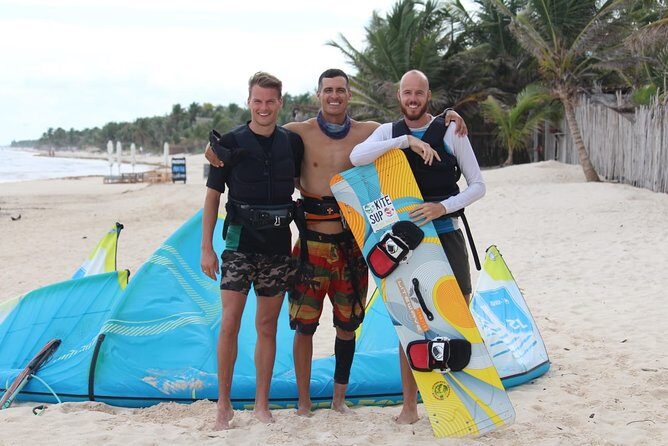
If you’ve ever watched someone kiteboard and thought, I could never do that, you’re not alone. Kiteboarding looks like balance and bravery, but the real difference between beginner chaos and controlled progress is understanding the kite and the safety mechanics.
This experience is built around that reality. You start on land learning what the kite is doing in the air, then you work through body positions and power strokes in the water before you try waterstarts. That sequencing helps your brain connect the dots fast, which is exactly what you need in a single afternoon session.
The other thing I like: you’re not just handed a board and told good luck. The structure has you repeatedly practice control, then practice what changes when you move from beach to water. You’ll also benefit from instruction by IKO–certified staff, and the tone seems to lean practical and encouraging. In past sessions, coaches like Mauricio, Antonio, and Beau are described as patient and motivating, with demos that make first attempts feel more doable.
You can also read our reviews of more tours and experiences in Tulum


Stop 1 at the Mexican Caribbean Kitesurf & Paddlesurf Base
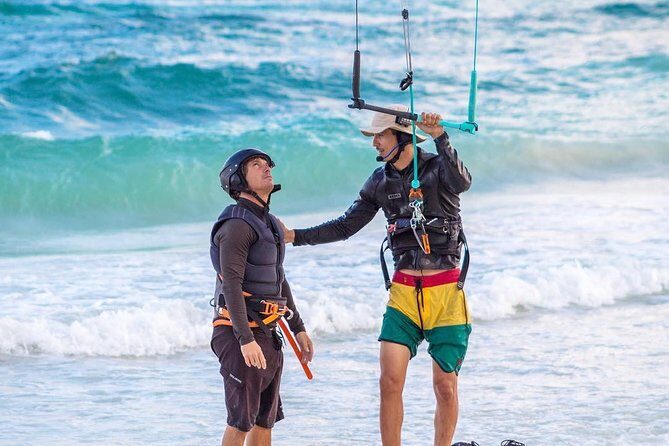
Your lesson begins at Ahau Tulum, on Carr. Tulum a Boca Paila Km. 7.5, Zona Costera, Tulum Beach (77760). The activity ends back at the same meeting point, so you’re not building a whole day around logistics.
At the base, you’ll have access to bathrooms, showers, and Wi‑Fi, which sounds boring until you’ve finished getting splashed with salt water and wind. You also have paddleboarding use included, which can be a nice extra if you want low-stress time on the water either before or after your kite work.
A small practical note: the session is listed as about 3 hours, but kite sports always depend on conditions. You should plan with flexibility and be ready for timing to adjust if the wind is better at a different hour.
At the Beach: Kite and Wind Theory You’ll Actually Use
Most “intro” activities stop at how to hold the kite. This one starts where it should: with wind and kite behavior.
Here’s the beach sequence you’ll go through:
Kite & wind theory
You’ll cover basics like the wind window, which is the usable area where the kite produces power without drifting into danger zones. This matters because your body can’t correct what the kite is doing if you don’t understand where it wants to sit.
Set up the kite & lines
You’ll get familiar with equipment setup so you understand what’s happening before you’re in the water. When you can identify lines, control systems, and key components, you’re less likely to panic when something feels off.
Inner workings of the bar & safety systems
This is the part that can feel technical, but it’s the difference between controlled practice and scary situations. You’ll learn what the bar does and how the safety system works, including enough detail to build confidence.
Self-rescue technique
You’ll practice self-rescue so that if you lose the kite or get in trouble, you’re not starting from zero.
Kite control
Then you practice driving the kite in the air while you stay grounded. That’s how you learn throttle-like control with your hands and body, rather than trying to “learn while flying.”
In reviews, coaches such as Mauricio are praised for being highly competent motivators. One key theme: good instructors teach you the why, not just the next step. If you’re prone to feeling overwhelmed, this beach groundwork helps you get your bearings fast.
In the Water: Body Drag Upwind and Power Strokes
Once you’re out on the water, you start with movements that build the foundation for actually riding.
Body drag upwind
This drill teaches you how to move relative to the wind without committing to full board riding yet. “Upwind” work is especially important because your goal later is to ride both directions, not just drift.
Power strokes
This is where kite control becomes body control. You’ll practice the rhythm of when to increase kite power and when to calm it down, so you can create stability instead of being yanked around.
For beginners, these are the moments that often make the lesson feel like it’s finally clicking. One reviewer also recommended starting lessons early in your trip because wind determines what’s possible. That’s not just a warning; it’s reality. If you get the right conditions, you’ll progress quickly through water drills.
Waterstart Progress: Assistance, Then Solo
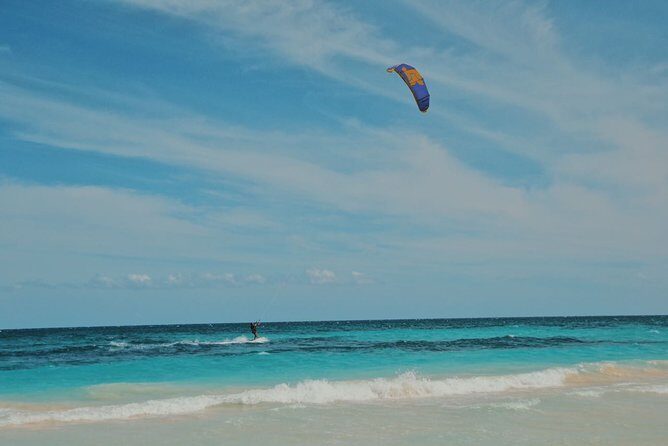
The heart of learning to kiteboard is the waterstart. If you can’t waterstart, you can’t ride, and if you can’t ride, you’re basically stuck practicing what comes before the fun part.
This lesson goes step by step:
Waterstart with assistance
You get hands-on help as you try to get going. Think of it like learning to pedal with someone holding the bike steady.
Waterstart solo
Then you attempt it without the same level of direct help, which is where confidence grows. This solo phase is key because it forces you to own kite timing and body position.
After that, the lesson shifts into riding practice rather than only drills.
- Selva Maya Eco Adventure Park: Ziplining, Hanging Bridges, Rappelling and Cenote
★ 5.0 · 1,057 reviews





Ride Downwind, Ride Upwind, and Practice Transitions
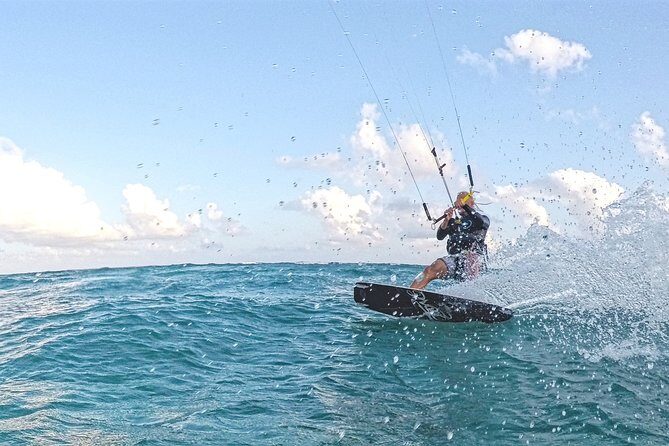
Once you’re able to start, you’ll train the next skills that make kiting feel like a sport instead of a series of recoveries.
Ride Downwind
Downwind riding is usually more forgiving and helps you feel the board gliding with the kite pulling behind you.
Ride Upwind
Upwind is harder and requires better control of body angle and kite position. You’ll practice how to keep tension and avoid losing momentum.
Transitions
Transitions are the connections—getting from one riding mode to another without wiping out or losing control. Even if you don’t feel perfect, practicing transitions trains your brain to plan moves, not just react.
One reviewer who completed multiple group lessons described being able to ride upwind partially after several sessions. That’s a useful expectation: you might not master everything in one 3-hour lesson, but you should leave knowing exactly what to focus on next.
How the Wind Strategy Can Improve Your Chances: Timing and El Cuyo
Here’s the honest truth about kiteboarding in Tulum: you’re learning a wind-powered sport. If the wind isn’t there, you don’t “push harder,” you wait or adjust.
You’ll be working in an environment where timing matters. In one review, Mauricio messaged ahead during a stay to shift lessons to the most optimal time. Another review mentioned they discovered another spot about two hours away to keep learning when Tulum conditions weren’t great. There’s also a strong theme that instructors may take you to better conditions further north toward El Cuyo for more reliable wind.
That flexibility can be a big deal for value. A lesson that runs only partly because the wind is weak is disappointing. A lesson that’s adapted to find workable conditions tends to feel much more productive.
Practical advice: if you have multiple days in Tulum, don’t lock your learning into the last possible afternoon. Build in at least one extra day of cushion, so you can take advantage of wind windows.
Value for $150: What You’re Buying (and What You’re Not)
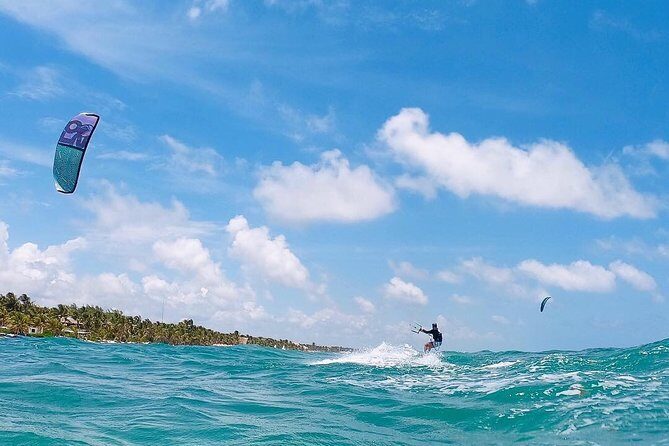
Price: $150 per person for about 3 hours. At first glance, that might sound like a lot—until you break down what’s included.
What’s included:
- IKO-certified instructor
- Kiteboarding gear
- Bathrooms, showers, and Wi‑Fi at the base
- Use of paddleboarding (a bonus option on site)
What’s not included:
- Transportation
- Food and drinks
For value, the biggest piece is the gear and the instruction quality. Kiteboarding gear can be expensive and gear fit matters. Having the full setup ready lets you focus on learning instead of sourcing and assembling everything. Add the 2-student-to-1-instructor structure, and your time is less likely to feel stretched.
Also, keep expectations realistic: this is a single session with a set lesson plan. If your goal is quick mastery, you might eventually want more than one lesson. The reviews include examples of people taking several sessions over a week and progressing from beginner work toward riding upwind.
Logistics That Matter: Group Size, Language, and Timing
This is offered in English, and you’ll receive confirmation at booking. The session is described as private in the sense that you won’t be mixed into a huge random crowd—just your group.
The group format is important: 2 customers + 1 instructor. That ratio usually means:
- You’re not waiting too long between attempts.
- The instructor can correct positioning and kite control without yelling over chaos.
- You can actually learn the progression steps rather than watching from the shore.
The lesson also has a minimum age of 10 years and calls for moderate physical fitness. That doesn’t mean you need to be an athlete, but kiteboarding does require moving with purpose while handling equipment in water.
Who Should Book, and Who Should Skip It
This experience comes with clear guidance.
It’s not recommended for participants with back problems or serious medical conditions. The work includes being in water, handling gear, and doing drills that can involve sudden body movements.
Minimum age is 10, so families can consider it if the child is comfortable with water and physical effort. Service animals are allowed.
Who it suits best:
- Total beginners or early intermediate learners who want a structured path
- People who learn best with coaching and step-by-step drills
- Anyone who wants to understand safety and control, not just try to jump on a board
Who it might not suit:
- Anyone who can’t handle moderate physical effort in salt water
- People who want purely scenic sailing and no hands-on skill work
What to Bring and How to Prepare (Without Overthinking It)
You’re heading to the beach and getting wet. Plan for that.
Bring the beach basics you’d normally want in the sun: sunscreen, a towel, and something you’re comfortable wearing in the water. If you’re prone to chafing, consider protective clothing or anti-chafe. And since you’re working in wind, keep your essentials secured.
Since transportation and food aren’t included, plan your day so you’re not hungry right after the lesson. If you want a full-day plan, you’ll likely enjoy pacing things around the 3-hour session plus any wind-driven delays.
My Bottom Line: Should You Book This Kite Lesson in Tulum?
Yes, I’d book it if you want a beginner-friendly lesson that teaches you how kiteboarding actually works. The beach-to-water progression is smart: wind theory and safety first, then controlled water drills, then waterstarts, then riding practice that includes upwind and transitions.
It’s also a good bet for value because gear and IKO instruction are included, and the group size stays small. Just don’t ignore the wind reality. If you’re only in town for one day, you might get less riding time than you hoped. In that case, book early and keep a little flexibility, because instructors like Mauricio have adjusted timing and even moved learning toward better conditions like El Cuyo when needed.
If you’re looking for a first taste of the sport that feels structured, safe, and genuinely teachable, this fits.
FAQ
How long is the kiteboarding lesson in Tulum?
The lesson is about 3 hours.
How much does the group kiteboarding lesson cost?
It costs $150.00 per person.
What language is the instruction offered in?
Instruction is offered in English.
What group size should I expect?
It runs as a small group: 2 customers with 1 instructor.
What’s included in the price?
You get an IKO-certified instructor, kiteboarding gear, and use of bathrooms, showers, and Wi‑Fi. Paddleboarding use is also included.
What isn’t included?
Transportation and food and drinks are not included.
What are the minimum age and fitness requirements?
The minimum age is 10 years, and you should have a moderate physical fitness level.
What happens if weather affects the activity?
This experience requires good weather. If it’s canceled due to poor weather, you’ll be offered a different date or a full refund.
What’s the meeting point?
You start at Ahau Tulum, Carr. Tulum a Boca Paila Km. 7.5, Zona Costera, Tulum Beach, 77760 Tulum, Q.R., Mexico, and the activity ends back at the meeting point.
You Might Also Enjoy

More Workshops & Classes in Tulum



More Tour Reviews in Tulum
- Selva Maya Eco Adventure Park: Ziplining, Hanging Bridges, Rappelling and Cenote
★ 5.0 · 1,057 reviews