REVIEW · PLAYA DEL CARMEN
Discover Scuba Diving Course in Playa del Carmen with Two Coral Reef Dives
Book on Viator →Operated by SCUBA LIBRE · Bookable on Viator
A reef visit plus a real training day. This Discover Scuba course is designed to get you breathing underwater and seeing coral quickly, without months of cert classes. I especially like the careful progression from theory to pool to open-water time, and the small group size that keeps the coaching focused. One thing to consider: it’s not a certification track, so if you’re chasing a full license, this won’t replace that.
You’ll spend the morning learning safety and gear basics, then the afternoon on two shallow reef experiences in different locations with a PADI Professional. Instructors like Jack and Sam are specifically praised for breaking skills down clearly, and people also highlight how patient coaching matters for first-timers. If you’re prone to ear pressure issues, plan to go slowly and communicate early, since that’s where the day can feel most stressful for some.
In This Review
- Key Highlights Worth Your Time
- A First-Timer Day Built Around Real Underwater Skills
- Morning Training (8:00–11:00): Safety, Gear, and Controlled Breathing
- Classroom to set expectations fast
- Pool practice so you learn the mechanics
- Midday Break: Time to Reset Before the Reef
- Two Afternoon Reef Sessions (12:00–16:00): 40 Minutes Each in Different Locations
- Why two locations is smarter than one
- What you’re likely to see
- Boat + marine park fee note
- Scuba Libre: The Base for Meeting and Getting Set Up
- What Makes the Instructors Matter on Day One
- Clear breakdowns reduce panic
- Ear equalization is the big personal hurdle
- Price and Value: What You Pay, What You Get
- Who This Is Best For (and Who Should Think Twice)
- Practical Tips for Having a Smooth Reef Experience
- Should You Book This Discover Scuba Day?
- FAQ
- What’s the price of the course?
- How long is the experience?
- What happens in the morning?
- Do I need scuba certification before I go?
- Is there a minimum age?
- What do you do in the afternoon?
- What sea life or coral can I expect to see?
- What’s included in the price?
- What isn’t included?
- What if weather is bad?
Key Highlights Worth Your Time
- Small group size (max 8 travelers) for more individual attention
- 8:00–11:00 training block with classroom + pool skills
- Two separate afternoon reef sessions, 40 minutes each
- All equipment provided plus water during training and on the boat
- Family-friendly entry point for ages 10+ with no prior scuba experience required
A First-Timer Day Built Around Real Underwater Skills
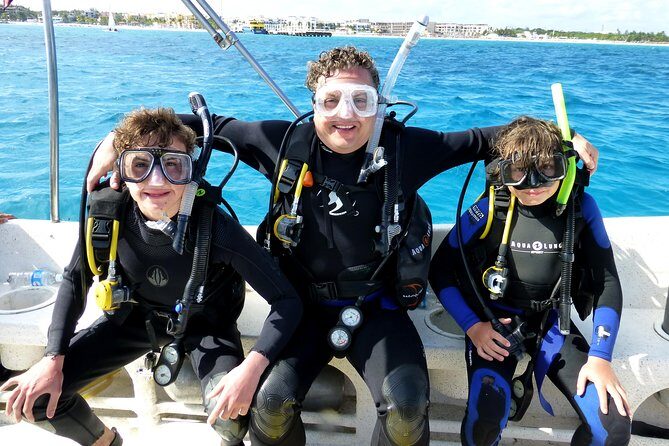
Scuba can look effortless in videos. In real life, it’s a skill set: gear control, slow breathing, and buoyancy. This course is built to teach those basics in a logical order, so your reef time doesn’t feel like chaos.
I like the way the schedule is split into two phases. The morning is about understanding what your body has to do and how the equipment works. The afternoon then uses those skills right away on the coral reefs off Playa del Carmen. It’s also reassuring that the day is capped at 8 travelers, which keeps instructors from rushing the group.
There’s one key reality check, though. This is Discover Scuba, not a full certification course. You’ll learn and try real scuba, but you’re not leaving with a license in hand. If you want the shortest path to a license, you’ll need a different program after this.
You can also read our reviews of more scuba diving tours in Playa del Carmen
Morning Training (8:00–11:00): Safety, Gear, and Controlled Breathing
The day starts at 8:00 am at Scuba Libre in Centro Playa del Carmen. The training runs roughly until 11:00, and it follows a simple goal: get you comfortable enough to breathe normally underwater and handle the basics with confidence.
Classroom to set expectations fast
You’ll cover the basic safety guidelines and review the scuba equipment you’ll use later. This isn’t just a lecture. You’ll also learn how the gear affects your movement, so you don’t feel surprised when you’re weighted up underwater.
A big part of the value here is that you get an explanation of what to focus on during the session—things you’ll repeat every time you get in the water. That matters because first-timers often struggle with trying to do everything at once. When you’re given a short list of priorities, you relax.
Pool practice so you learn the mechanics
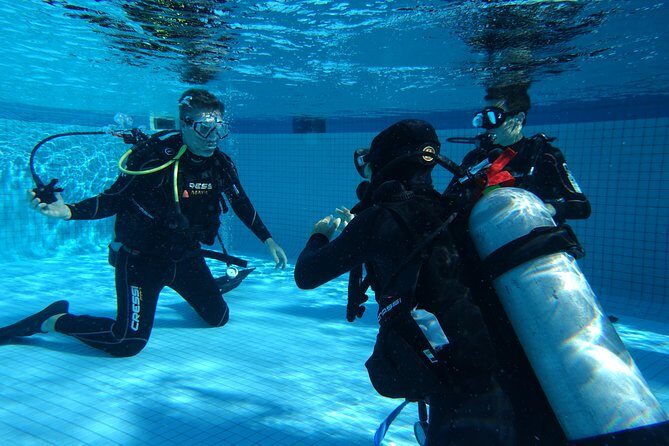
Next comes pool training. This is where you practice breathing through the regulator, moving with the equipment, and using core skills before you’re out on the reef. It’s also where you’ll discover your personal “first day” issues—like ear pressure problems.
One story that really sums up the point: someone had trouble regulating their ears at first and got frustrated, but the instructor (Alma) stayed patient and helped them adjust. That kind of coaching is exactly what you want on day one: calm, practical help rather than pressure to just push through.
Midday Break: Time to Reset Before the Reef
After the morning block, there’s a break around midday before the afternoon sessions. The rhythm is simple: you train, you eat and reset, then you go back out for two reef experiences.
This timing is practical for your brain and body. You’ll likely feel the effects of learning new breathing patterns and holding your focus underwater. A break helps you come back for the afternoon calmer, which makes buoyancy and ear equalization easier.

Two Afternoon Reef Sessions (12:00–16:00): 40 Minutes Each in Different Locations
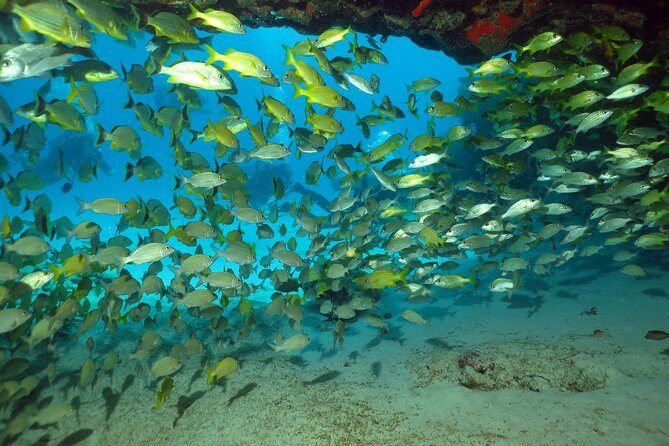
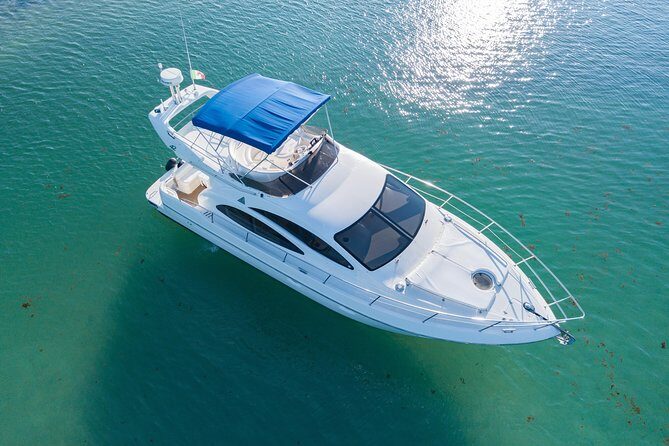
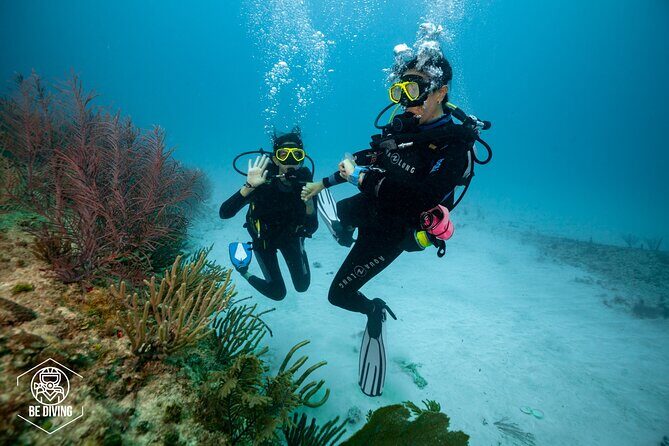
From about 12:00 to 16:00, you’ll do two shallow reef sessions of around 40 minutes each. The reefs are in two different locations, and you’ll be guided by a PADI Professional.
Why two locations is smarter than one
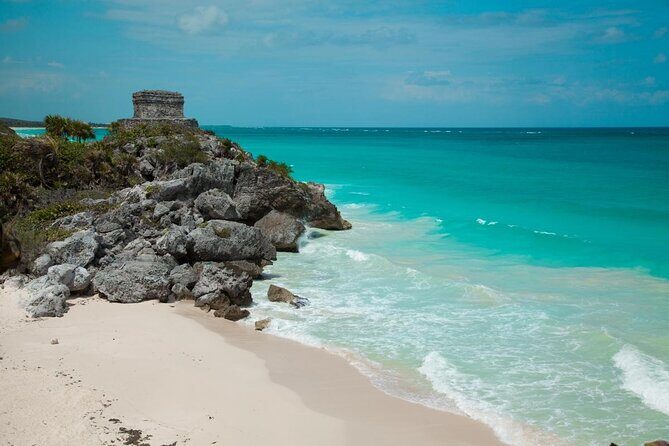
A single reef stop can be pretty, but it can also be hit-or-miss depending on conditions. Two locations gives you more chances for variety. One of the best parts of the day is that you’re not just watching coral for one short stretch—you’re getting repeated underwater time with chances to see different behavior and scenery.
What you’re likely to see
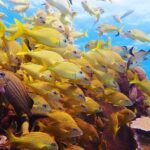
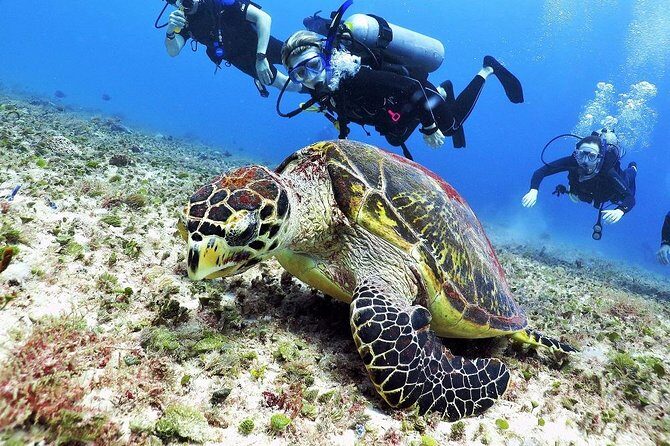
The goal is coral and wildlife. The program specifically points to animals like:
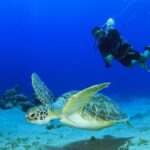
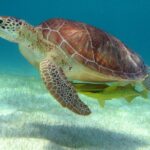
- turtles
- moray eels
- groupers
- barracudas
- crabs and shrimps
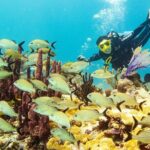
You’ll also see lots of coral types, plus fish schools that make the underwater world feel alive even during shallow sessions.
Boat + marine park fee note
Plan on the reef side having additional costs. The boarding & marine park fee is $20 per person, and it’s not included in the base price. Water is included during the training and on the boat, which is helpful in Playa del Carmen’s heat.
Scuba Libre: The Base for Meeting and Getting Set Up
The start and end point is at Scuba Libre, located on Calle 4 Nte, Manzana 3 between 5a Avenida y zona federal marítima, Centro, 77710 Playa del Carmen, Q.R., Mexico. You’ll also return to the same meeting point when the activity ends.
That’s a small but real convenience. You’re not dealing with complicated transfers at the end of the day when you’re tired and maybe slightly sun-warmed.
What Makes the Instructors Matter on Day One
Most first-timer frustration comes from two places: not knowing what to do, or feeling like your body is failing you. The way this course teaches and coaches helps solve both.
Clear breakdowns reduce panic
Instructors such as Jack are praised for excellent scuba instruction and a personality that helps first-timers feel at ease. People also mention Geovanni assisting with getting buoyancy under control. That’s big, because neutral buoyancy is the skill that makes everything else feel easier—walking around on the reef, looking at coral, and not fighting the water.
Ear equalization is the big personal hurdle
Pressure and ear regulation are common issues. One person described ear problems that triggered frustration, and the instructor helped them figure out how to be patient until it clicked. Another person found the ocean beautiful even though they personally struggled with breathing too fast and buoyancy control.
My advice if you know you get pressure headaches on planes or elevators: tell your instructor early and treat it like a skill you’re learning, not a test you’re failing.
Price and Value: What You Pay, What You Get
The price is $169.00 per person. For that, you’re getting a full 8-hour introduction day that includes classroom, pool training, and two shallow reef experiences—plus a professional instructor and all necessary equipment.
That’s the value angle: you aren’t paying just to be taken to the water. You’re paying for the coaching and the time spent learning skills in a controlled environment first.
Two costs to factor in:
- $20 per person boarding & marine park fee (not included)
- Optional photos for purchase (not included)
Also, there’s an extra option if you want the course pick-up closer to a specific hotel: if you’d like it at Sandos Hotel, there’s a $15 USD boarding fee.
When the group is limited to 8 travelers, the instructor-to-student attention feels more realistic for beginners. That matters, because equipment fitting and skill coaching aren’t “spray and pray.” They’re part of what you’re paying for.
Who This Is Best For (and Who Should Think Twice)
This is a great fit if you want a real taste of scuba without committing to a long certification course. It’s also a strong option for families and mixed groups because it’s structured, guided, and built around safety and fundamentals.
You should think twice if:
- you’re only interested in becoming certified right away
- you expect zero nerves and zero breathing discomfort (first-timers almost always need a moment to settle)
- you have serious physical limitations (the program calls for reasonable physical health)
If you’re a “try it once” kind of person, this is one of the smarter ways to do it. If you’re a “I want to master buoyancy perfectly on day one” kind of person, you’ll still have a good time, but you may need extra patience with the learning curve.
Practical Tips for Having a Smooth Reef Experience
Here are a few things that help your afternoon go better, based on the kinds of challenges first-timers ran into during the day.
- Breathe slowly and don’t rush. Faster breathing can mess with buoyancy and make you feel out of control.
- Focus on buoyancy before sightseeing. If you feel light or sinking, fix that first, then look around.
- Communicate early about ear pressure. If you wait, stress grows and it becomes harder to learn.
- Aim to relax in the water. Neutral buoyancy often improves when you stop fighting your body and let the coaching guide you.
And remember: reef time is shallow and guided for a reason. You’re there to learn, not to prove anything.
Should You Book This Discover Scuba Day?
If you want an organized first experience that includes pool practice and then two reef sessions, this is a strong pick. You’ll get professional guidance, equipment included, and real underwater time without having to slog through a full course.
Book it if you:
- want a short path into scuba
- like structured learning with a small group
- want to see coral and marine life like turtles and moray eels with coaching on hand
Skip it if your main goal is certification rather than an introduction, or if you know you struggle with pressure problems and you aren’t willing to slow down and work with the instructor.
FAQ
What’s the price of the course?
The price is $169.00 per person.
How long is the experience?
It’s about 8 hours.
What happens in the morning?
From around 8:00 to 11:00, you’ll do theory plus pool training. You’ll learn safety basics, equipment, how it feels to breathe underwater, and key skills.
Do I need scuba certification before I go?
No prior scuba experience is required, and this is not a certification course. It’s a Discover Scuba introduction.
Is there a minimum age?
Yes. The minimum age is 10 years old.
What do you do in the afternoon?
From about 12:00 to 16:00, you’ll do two shallow reef sessions of about 40 minutes each in two different locations, with a PADI Professional.
What sea life or coral can I expect to see?
The experience is aimed at coral and animals such as turtles, moray eels, groupers, barracudas, crabs, shrimps, and more.
What’s included in the price?
Water is included during training and on the boat, along with a professional instructor and all necessary equipment.
What isn’t included?
Photos are available to purchase, and there’s a boarding & marine park fee of $20.00 per person that isn’t included.
What if weather is bad?
This experience requires good weather. If it’s canceled due to poor weather, you’ll be offered a different date or a full refund.