REVIEW · PLAYA DEL CARMEN
Scuba Diving in Cenote Kukulkan from Playa del Carmen
Book on Viator →Operated by The Cenote Guy · Bookable on Viator
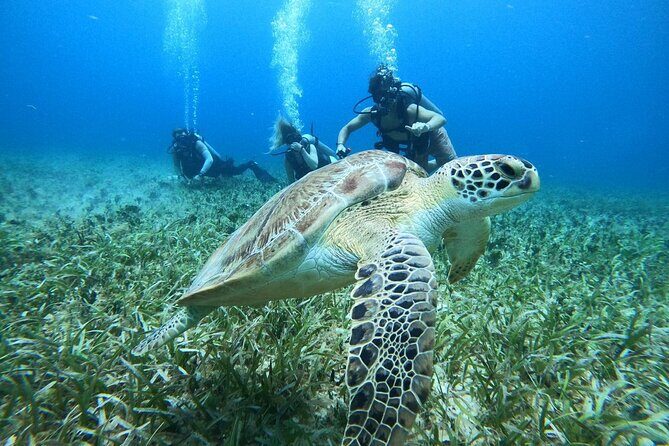
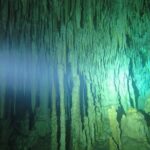
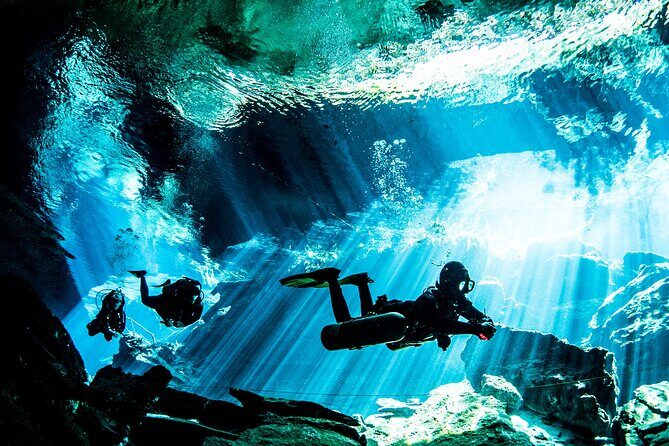
Cenote light hits different when you’re underwater. This Cenote Kukulkan experience is built for comfort and clarity, with round-trip transport from your area, gear taken care of, and a guide who explains what you’re seeing. You’ll be in a small group (max 4), so the day feels more personal than the big-bus style.
I really like that the team handles the big logistics for you: scuba gear is included, and it’s already staged in the vehicle when you meet at 8:00 am. I also like the payoff at the end—an included typical Mexican lunch right after your second underwater route. One key consideration: the cenote entrance fee (MX$300 per person) is not included, so you’ll want to budget that on top.
In This Review
- Key things I think are worth your attention
- Cenote Kukulkan: What you’re really signing up for
- 8:00 am meeting and the 30-minute ride from Playa del Carmen
- Small-group setup: gear, tank checks, and comfort tips
- Getting ready at the cenote: walking the entry point and the path
- Two underwater routes with a surface interval that fits your first one
- Lunch and snacks: how you’ll handle the hours after the water
- Price and value: gear, transport, and the cenote entrance fee
- Who this is perfect for (and who should think twice)
- What to bring: follow the rules they set (especially cameras)
- What the guide experience feels like in practice
- Should you book Cenote Kukulkan from Playa del Carmen?
- FAQ
- Where is the meeting point, and what time do we start?
- How long is the experience?
- Is round-trip transport included?
- What group size should I expect?
- What scuba experience level is required?
- Is the entrance fee included in the tour price?
- What’s included for food and drinks?
- Are underwater cameras allowed?
- What is the minimum age?
- Is there any restriction if I’m flying soon?
Key things I think are worth your attention
- Gear is taken care of before you even start walking toward the water
- Small group max 4 means more time to ask questions and get adjustments
- Tank pressure check + gear inspection before the first underwater session
- Mayan culture context on the way there, not just a last-minute speech
- Two different underwater lines with a surface interval set by how the first one goes
- Included lunch plus snacks to keep your energy steady all day
Cenote Kukulkan: What you’re really signing up for
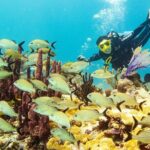
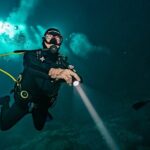
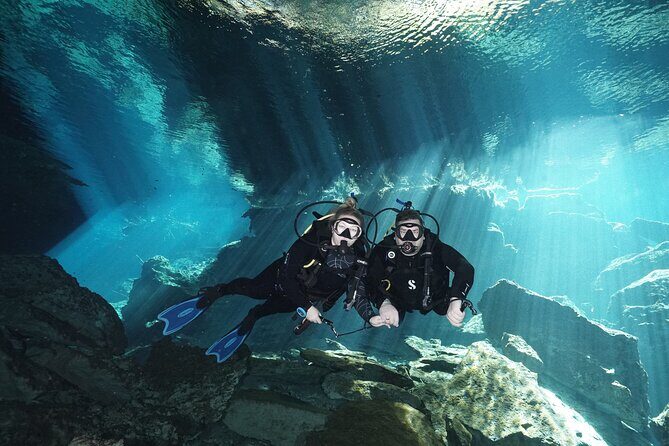
Cenotes aren’t just “cool water.” They’re natural sinkholes where light does strange, beautiful things—especially once you’re weighted up and looking into the rock. What makes Cenote Kukulkan memorable is how the tour is paced to let you notice those effects instead of rushing you from one checklist moment to the next.
The guide also gives you context. On the ride from Playa del Carmen, you’ll hear about the importance of cenotes and Mayan culture, so the place feels more than a scenic stop. Then, during the underwater portion, the guide builds in pauses so you can simply take in the refractions and the feeling of moving through that controlled, cave-like environment.
You can also read our reviews of more scuba diving tours in Playa del Carmen
8:00 am meeting and the 30-minute ride from Playa del Carmen
Your day starts at 8:00 am at the Fruit StandCentro area in Playa del Carmen (Fruit StandCentro, 77710). The gear is loaded into the vehicle before you arrive, which is a small detail that matters. You spend less time standing around, and more time getting ready calmly.
The drive to the cenote is about 30 minutes. During that time, the guide shares what to expect for the program, plus some history and why cenotes matter in the Mayan world. You also get a better sense of the day’s flow—especially helpful if it’s your first time doing this type of underwater setup.
Practical note: this is offered in English, and the guide is described as professional and multilingual. If you’re relying on explanations to feel comfortable, that’s a big plus.
Small-group setup: gear, tank checks, and comfort tips
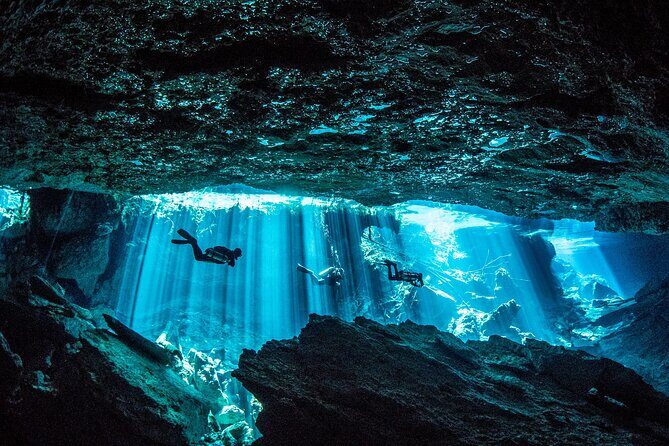
Once you arrive on site, you’ll prepare your equipment. This is where the tour earns trust.
Before you go in, the guide:
- checks your gear is ready to go,
- inspects the scuba setup,
- and checks the tank pressure in detail.
They also talk with you about your previous experience and offer tips to help you feel comfortable during these underwater sessions. That matters because cenotes can feel mentally different from open water. The rock, the light, and the confined visual cues make good coaching a lot more important than just having equipment.
In one of the standout comments, the guide Remi was praised for going beyond surface-level instruction and for pausing at the right moments. That lines up with how this is structured: you’re not just completing an activity—you’re being coached through it.
Getting ready at the cenote: walking the entry point and the path
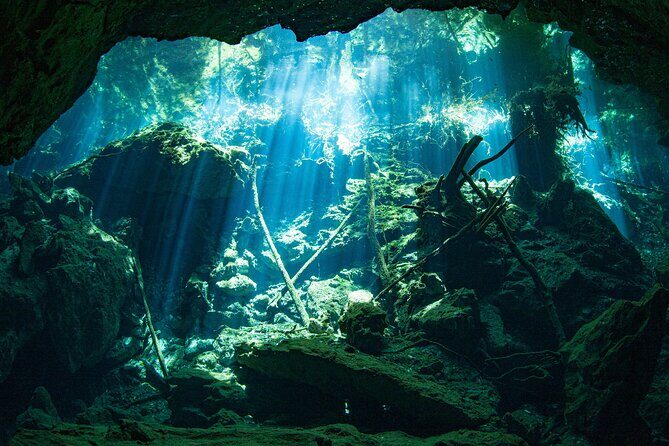
Before the first underwater session, you’ll walk around the premises. You’re not thrown straight into the water. You get familiar with:
- the entry point,
- and the dive path (your guided route underwater).
Then comes the security and dive briefing before the first tank time. This isn’t only safety talk. It’s also about expectations—what the guide wants you to focus on, how you’ll manage your time, and how the group will move.
If you’re the type who relaxes faster after you know the plan, you’ll likely appreciate this pacing.
Two underwater routes with a surface interval that fits your first one
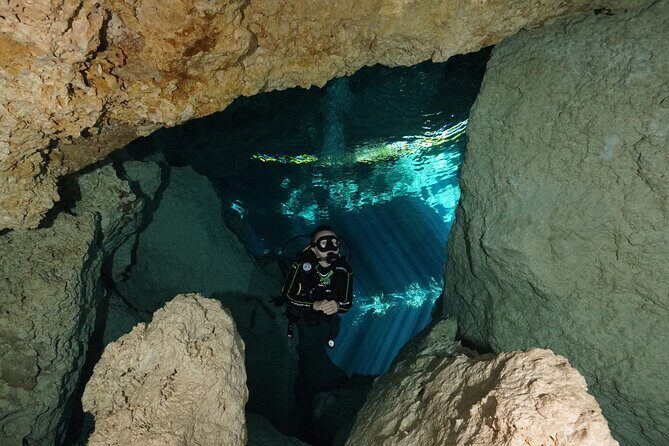
You’ll do two underwater routes on two different lines. The first one sets the tone, and the surface interval is determined based on how the first underwater session goes.
After you finish the two routes, you’ll regroup and then head into the meal portion of the day. The total timing is designed so you’re back in Playa del Carmen between 2:30 pm and 3 pm.
One thing I really like about this structure is that it treats the first route as a check-in, not a gamble. You’re not stuck on a rigid schedule where everyone must match the same pace regardless of comfort or conditions.
Also, a couple important rules to plan around:
- Scuba certification is mandatory (minimum Open Water).
- No underwater cameras allowed. If you were counting on filming yourself, plan for photos on land instead.

Lunch and snacks: how you’ll handle the hours after the water
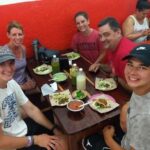
You get snacks and refreshment throughout the day. Then after the second underwater route, you share a meal together in a typical Mexican restaurant.
There’s one practical adjustment: Covid-era restrictions have been limiting restaurant choices, so you might be served sandwiches instead of a full plate. Either way, the meal is included, and it’s timed for when you’ll actually need it—right after tank time, before you have to travel back.
This meal stop is more than food. It’s also where the day’s “story” lands. You’ll have time to compare notes—what the light looked like, how your buoyancy felt, what route you enjoyed most—without rushing back to the next agenda item.
Price and value: gear, transport, and the cenote entrance fee
Here’s the part to do math on, so you don’t get surprised.
Included in the experience:
- professional multilingual guide (English offered),
- typical Mexican lunch,
- snacks and refreshment,
- scuba equipment rental (complementary),
- transportation from your meeting point (and the highlights specifically note round-trip transfers from your hotel).
Not included:
- Entrance fees to both Cenotes: MX$300.00 per person.
What that means for value: even without knowing the base tour price you pay up front, you’re already getting most of the expensive, annoying pieces handled. Gear rental and transfers are usually where costs add up. The included lunch and snacks reduce the “hidden spending” that often happens after a half-day activity.
So I’d budget in two parts:
1) your tour cost, and
2) the MX$300 entrance fee per person at the cenote.
If you’re traveling with another certified diver or two, you’ll also like the small-group nature and the mention of group discounts.
Who this is perfect for (and who should think twice)
This tour is straightforward, but the requirements are real. It’s not built for absolute beginners.
Best fit:
- You have at least Open Water certification.
- You’re comfortable handling your gear and following a guided plan.
- You like small groups and want instruction that improves how the experience feels underwater.
You also have a clear age minimum: minimum age is 15.
Timing and health considerations matter:
- If your last scuba experience was less than 6 months ago, that’s a minimum requirement listed for participation (meaning the operator expects a recent refresher).
- Not suitable 12 to 18 hours before taking a plane.
- Not recommended for travelers with heart problems or other serious medical conditions.
If you’re any of those categories, it’s better to pause and choose something else where your safety can be prioritized more appropriately.
What to bring: follow the rules they set (especially cameras)
Because you won’t be bringing your own scuba gear, you can travel lighter than you might for some other operators. Just make sure you follow the specific restrictions.
Key reminders:
- No underwater cameras are allowed.
- You’ll have a mobile ticket, so keep it accessible on your phone.
- Scuba certification is mandatory, so you should be ready to comply with the operator’s certification requirement.
Beyond that, the biggest “bring” is mental preparation. Cenotes reward people who stay calm, keep their breathing steady, and listen when the guide adjusts the plan.
What the guide experience feels like in practice
A recurring theme in the feedback is how much the guides teach. In one of the standout accounts, Remi was described as both safe and extremely informative, mixing underwater coaching with historical and scientific explanation—especially about the way light refracts in the cenote.
Another strong signal: the group size stays at max 4 travelers, which reduces the “everybody keep up” pressure. In practice, that means the guide can pause where you need time to look, rather than charging ahead because the rest of the group is lagging.
And you’ll feel the difference from start to finish:
- gear already staged at the meeting point,
- a tank pressure check before anything starts,
- a briefing focused on safety and expectations,
- and a pace that makes room for noticing the water.
The overall rating is 5 stars from 370 reviews, and the recommendation rate is listed as 100%. That’s not proof of perfection, but it does point to consistency in the experience.
Should you book Cenote Kukulkan from Playa del Carmen?
If you’re a certified diver who values a small group, clear instruction, and a guide who explains more than just procedures, I think this is an easy yes. You’re getting transfers, gear rental, a guided setup with tank checks, two different underwater routes, snacks, and an included lunch.
Book it if:
- you want the comfort of having the gear and logistics handled,
- you like detailed coaching (especially if cenote environments feel new),
- and you’re okay budgeting the separate MX$300 entrance fee per person.
Skip or rethink it if:
- you’re not within the certification and timing rules (especially the Open Water minimum and the last-experience window),
- you can’t meet the health limitations listed,
- or you specifically want to use an underwater camera (since they don’t allow them).
FAQ
Where is the meeting point, and what time do we start?
You meet at Fruit StandCentro, 77710 Playa del Carmen, Q.R., Mexico, with a start time of 8:00 am.
How long is the experience?
The total duration is about 7 hours.
Is round-trip transport included?
Yes. Round-trip transfers from your hotel are listed as a highlight, and transportation from the meeting point is complementary. The activity ends back at the meeting point.
What group size should I expect?
This tour has a maximum of 4 travelers.
What scuba experience level is required?
Scuba certification is mandatory, with a minimum requirement of Open Water diving.
Is the entrance fee included in the tour price?
No. Entrance fees to both Cenotes are MX$300.00 per person, and they are not included.
What’s included for food and drinks?
You get snacks and refreshment throughout the day, plus a typical Mexican lunch at the end.
Are underwater cameras allowed?
No. Underwater cameras are not allowed on this activity.
What is the minimum age?
The minimum age is 15 years old.
Is there any restriction if I’m flying soon?
Yes. The activity is not suitable 12 to 18 hours before taking a plane.