REVIEW · PLAYA DEL CARMEN
Tour Cenote Santa Cruz
Book on Viator →Operated by Cenote Santa Cruz · Bookable on Viator
Cenote Santa Cruz feels like a world reset. You go beyond a quick splash with a guide-led walk through dry and wet cenote areas, plus explanations of formations, flora, and fauna. The whole vibe is intentionally slower and more respectful, with small group sizes built in.
I especially like the way this tour is framed as protection and cultural learning, not just sightseeing. You’re guided through the underground chambers with focus on what you’re seeing and why it matters.
One thing to plan for: mosquitos can be an issue in the cave-area approach, so bring or plan on some personal bug protection.
Key Highlights You Should Know
- Small groups with personal guide attention for calmer pacing and better answers
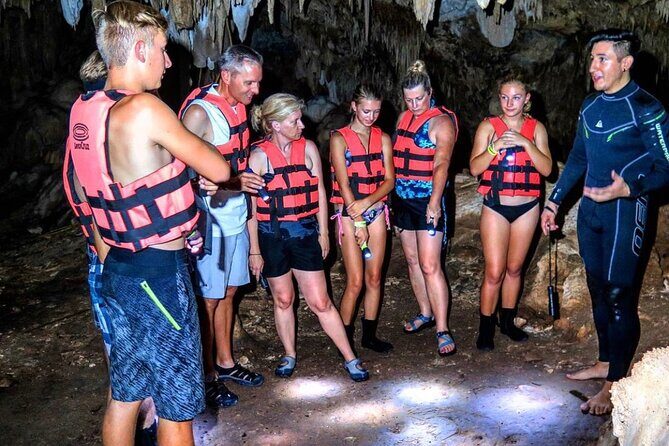
- Flashlights provided, so you can actually see the formations instead of guessing
- Snorkeling gear and life jackets available to borrow for the wet sections
- Dry + wet cenote experience, not just one “quick swim” stop
- Very old crystal-clear formations, described as more than 60 million years old
- Round-trip transfers from Akumal included, so the logistics are easier
In This Review
- Why Cenote Santa Cruz Feels Like Xibalbá’s Underworld
- Getting There from Akumal: Meet Point and Transfers That Reduce Hassle
- The 2.5-Hour Reality: How the Timing Usually Works on Cenote Tours
- Entering the Cenote Santa Cruz Chambers: Dry First, Then Wet
- What You Actually Learn: Formations, Flora, Fauna, and Why It’s Not Just Splashing
- Flashlights, Snorkeling Gear, and Life Jackets: Safety and Comfort Done the Easy Way
- Small-Group, Private Tour: Why Your Experience Feels Personal
- The Most Practical Drawback: Mosquitos (Bring a Plan)
- How to Choose Your Time Slot (Morning vs Afternoon)
- Value and Inclusions: What You’re Paying For (Without Add-On Headaches)
- Who Should Book This Cenote Santa Cruz Tour
- Should You Book Cenote Santa Cruz?
- FAQ
- How long is the Cenote Santa Cruz tour?
- Where is the meeting point in Akumal?
- Is round-trip transportation from Akumal included?
- What gear is provided for the swim?
- Is this tour private?
- What happens if the tour is canceled due to poor weather?
Why Cenote Santa Cruz Feels Like Xibalbá’s Underworld
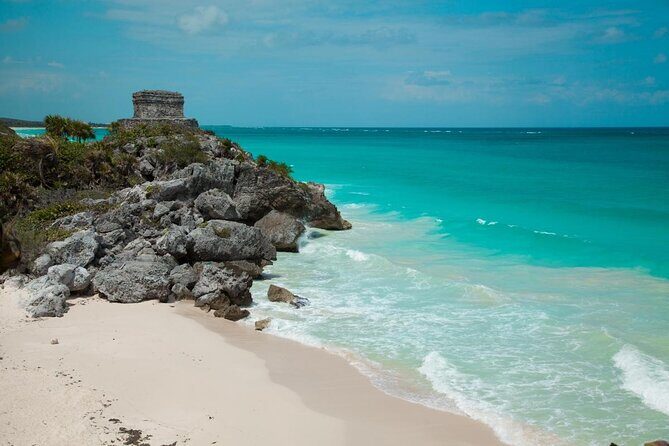
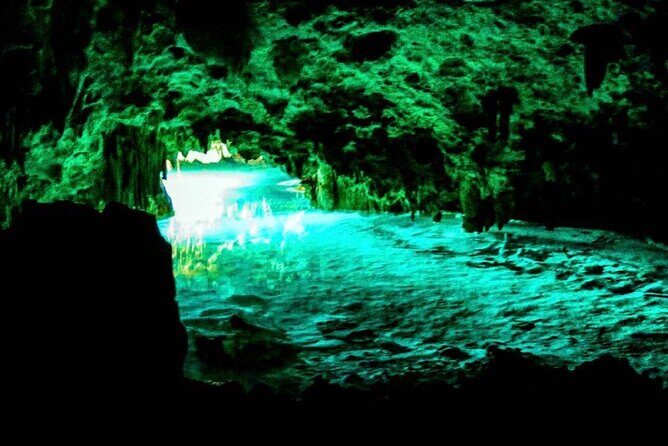
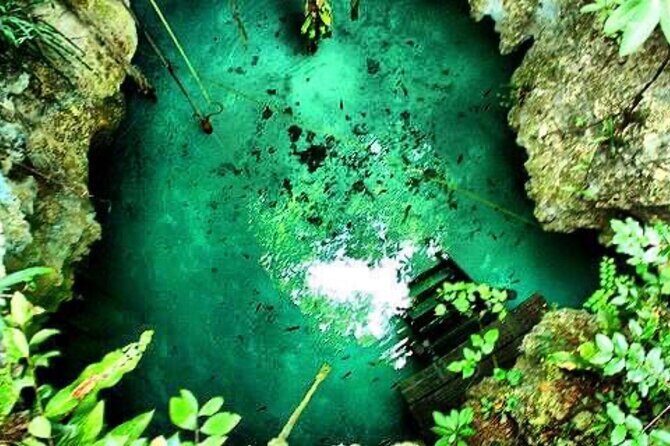
Cenotes in the Yucatán region have a special gravity—cool air, dark rock, and water that looks unreal. Cenote Santa Cruz leans into that feeling by guiding you through both dry and wet areas of the system, so you experience the space as a whole rather than only the swim portion.
This tour is also built around explanation. Instead of rushing you from pool to pool, the guide’s job is to help you understand cenotes as natural systems—what shapes them, what lives around them, and how the space works underground. It’s the kind of framing that makes your photos better, but more importantly, it makes the place make sense.
A final reason it’s memorable: the tour emphasizes crystal-clear water and very old rock formations. When a guide points out where the chamber changes and why the water behaves the way it does, you start paying attention to details you’d otherwise miss.
Getting There from Akumal: Meet Point and Transfers That Reduce Hassle
You’ll start at the Akumal Medical Center on Av. Gonzalo Guerrero (Mza 13 01 Lt 01, between Calle Punta Allen and Punta Piedra). That’s a practical choice: it’s not a random hotel pickup, so you can usually get there with less stress.
The tour includes round-trip transfers from Akumal, which matters more than it sounds. In this area, short drives through jungle roads can be the difference between arriving relaxed or arriving already tired. You also won’t have to worry about parking or navigating local roads when your main goal is a cave experience.
This is offered in English, and the activity ends back at the same meeting point. There’s also a mobile ticket, which helps you keep things simple on your phone instead of juggling paper.
You can also read our reviews of more tours and experiences in Playa del Carmen.


The 2.5-Hour Reality: How the Timing Usually Works on Cenote Tours
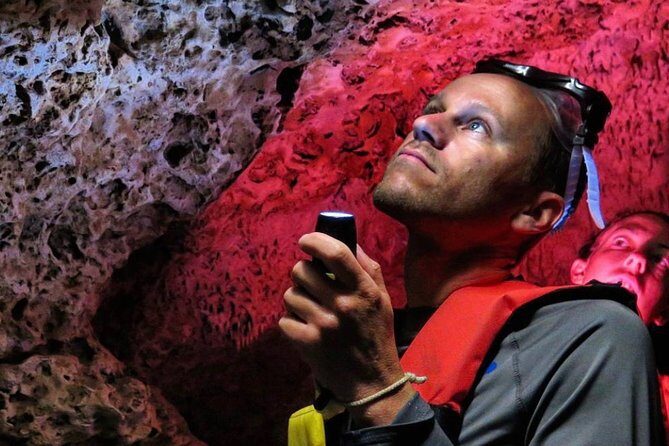
The activity is listed at about 2 hours 30 minutes total, while the cenote portion is described as around 2 hours with the admission ticket included. In practice, that usually means you’re not just stepping in for a short look—you’re getting enough time to do both the dry and wet sections without feeling yanked along.
Opening hours are seasonal and run Monday through Saturday, with windows shown as 9:00 AM to 12:30 PM and 1:00 PM to 3:30 PM for the periods listed. If you’re planning your day, I’d treat this like a “main event” slot, not something to wedge between beach lunch and a late dinner.
And because this is weather-dependent, I’d also plan for at least one flexible option during your trip. Underground cave conditions can change based on the day’s conditions above ground.
Entering the Cenote Santa Cruz Chambers: Dry First, Then Wet
The big idea here is that you go through a real system, not a single staged pool. You’ll get a guided tour through areas described as dry and wet, including underground chambers and pathways inside the cave setup.
The dry part matters because it builds context. You see the formations, you get the guide’s explanation of what you’re looking at, and you learn how the space is shaped before you ever get in the water. That makes the wet portion feel less like random swimming and more like a continuation of what you already learned.
When you transition into the wet areas, the experience shifts—cooler air, changing footing, and the simple fact that you’ll rely on lighting and water gear. The tour design helps you manage that shift with the right support (flashlight and borrowed snorkeling gear plus life jackets).
What you’re looking for is a guided experience through crystal-clear water and chambers with age-old rock features. If you’ve done cenotes before that felt like a quick photo stop, this pacing is the point: you get time to understand the space.
What You Actually Learn: Formations, Flora, Fauna, and Why It’s Not Just Splashing
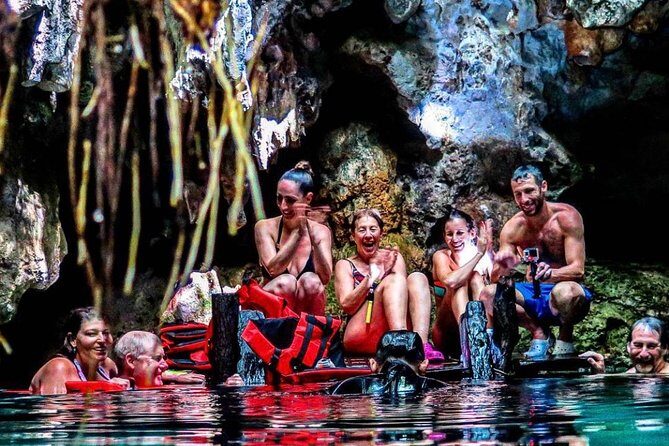
One of the best parts of this tour is the mission: it’s about protecting and culturizing visitors. In plain terms, the guide is there to explain, not just supervise.
The specific topics highlighted include cenotes, flora, fauna, and formations. That’s a meaningful list. It tells you you’re not only learning about what the cave looks like; you’re also learning what supports it—plant life around the system, animal life that depends on the environment, and the rock formations that make the chambers unique.
I like tours that help me “read” a place as I’m standing in it. Here, the guide’s explanations can turn a dark corridor and still water into something with structure and meaning. You start noticing how chambers open, where the water sits, and what makes the light behave the way it does.
Also, small-group pacing supports the learning. When you aren’t dealing with a packed line of people, you have space to ask questions and get answers that actually fit what you’re looking at right then.
Flashlights, Snorkeling Gear, and Life Jackets: Safety and Comfort Done the Easy Way
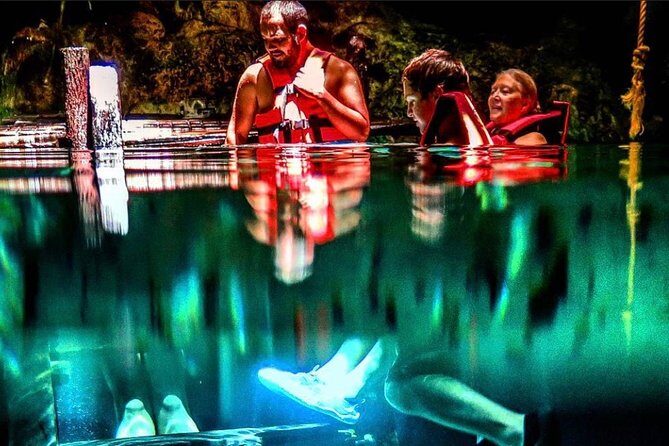
Cave tours live and die by visibility and comfort, and this one covers both.
You’ll be provided flashlights, which is huge in an underground environment. Instead of counting on random lighting conditions or trying to hold a phone up and hope, you get a proper light source designed for cave viewing.
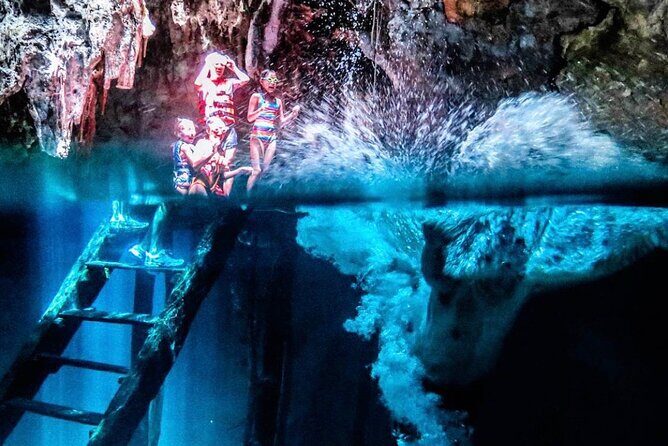
For the wet sections, snorkeling gear and life jackets are available to borrow. Even if you’re a confident swimmer, a life jacket can make the experience feel less stressful because you can focus on breathing, balance, and looking around. It also helps the tour move at a steadier pace when everyone is prepared the same way.
One more practical note: since this includes both dry and wet areas, plan to dress for cool and damp conditions. The cave itself is generally cooler than the outside, and you’ll want clothing that can handle getting splashed or damp during transitions.



Small-Group, Private Tour: Why Your Experience Feels Personal
This isn’t described as a big-bus style tour. It’s set up as private for your group, and the tour also emphasizes small groups for an ecological, enjoyable, fun visit.
That has a few direct benefits:
- The guide can slow down when you want to ask questions.
- You’re less likely to feel like you’re constantly chasing the person in front of you.
- You often get a better look at the pathways because the group isn’t moving like a single line.
There’s also a vibe of shared comfort. In the cave environment, less crowding usually means fewer bumps, fewer stop-and-go moments, and a calmer feeling when the light changes or you transition into the water.
If you’re traveling with kids or a mixed-age group, this kind of pacing can be a better fit than tours that treat the cave like a race through checkpoints.
The Most Practical Drawback: Mosquitos (Bring a Plan)
The only repeated “watch out” theme is mosquitos. Even with an underground destination, the approach and surrounding areas can be mosquito-friendly, and you may still get bites.
So I’d treat bug protection as part of your tour gear. I’d rather you over-prepare than spend half your trip swatting. If you prefer a natural option, consider that you still need something effective enough for the time you’ll be outside or near vegetation.
Also, pack light but think about quick solutions: if you’re the type who hates sticky sprays, pick your method ahead of time. Once you’re already in transit, it’s too late to start hunting for repellent.
How to Choose Your Time Slot (Morning vs Afternoon)
The schedule shows two main windows on operating days: a late morning block and an early afternoon block. I’d pick based on your day plan and how you like to move.
Morning can feel easier if you want to get it done before heat builds outside. Afternoon can work if you’ve got a relaxed beach start and want to keep the cave as your “midday reset.”
Just remember: this experience is weather-dependent, and it requires good weather. The tour provider can cancel if conditions aren’t right, and if that happens you’ll be offered a different date or a full refund.
Value and Inclusions: What You’re Paying For (Without Add-On Headaches)
Even without seeing a price tag here, you can judge value by what’s handled for you.
This includes:
- Admission ticket included for the cenote portion
- Round-trip transfers from Akumal
- Flashlights provided
- Snorkeling gear and life jackets available to borrow
- A small-group, guide-led learning experience in English
That combination matters because cenote tours often get pricey when you start stacking add-ons: transport, gear rentals, and entry fees. Here, you can walk in knowing the tour already covers the core experience pieces.
So the value isn’t just “you get in the water.” It’s that you get the full structure: learning time, safe gear support, and a guide who helps you understand what you’re seeing.
Who Should Book This Cenote Santa Cruz Tour
This is a strong fit if you want:
- More than a quick swim stop
- A guided experience focused on formations and the living environment
- A small-group feel and calmer pacing
- An activity with a moderate physical demand, but not a hardcore workout
The tour notes recommend travelers have a moderate physical fitness level. That usually means you should be comfortable with uneven cave pathways and the transitions between dry and wet sections.
If you hate surprises and want a clear plan with provided gear and lighting, this format is a comfort. And if you’re staying in Akumal, the included transfers make it an easy add-on to your stay.
Should You Book Cenote Santa Cruz?
If you’re choosing between a basic cenote swim and a more guided, educational walk through dry and wet chambers, I’d book this. The strongest reason is the way the experience is structured: you’re not just there for water. You’re there to understand the place—its formations, its living surroundings, and how the cave system feels as you move through it.
I’d also book it if you care about small-group attention and want a tour that feels personal rather than rushed.
Only hold back if mosquitos would seriously ruin your comfort and you don’t plan any protection, or if your schedule can’t handle a weather-related change. Otherwise, this is a thoughtful, well-supported cenote experience from Akumal.
FAQ
How long is the Cenote Santa Cruz tour?
It’s listed at approximately 2 hours 30 minutes, with the cenote experience described as around 2 hours.
Where is the meeting point in Akumal?
The meeting point is Akumal Medical Center on Av. Gonzalo Guerrero, with the address provided between Calle Punta Allen and Punta Piedra.
Is round-trip transportation from Akumal included?
Yes. Round-trip transfers from Akumal are included.
What gear is provided for the swim?
Flashlights are provided. Snorkeling gear and life jackets are available to borrow.
Is this tour private?
Yes. It’s a private tour/activity, and only your group participates.
What happens if the tour is canceled due to poor weather?
If it’s canceled due to poor weather, you’ll be offered a different date or a full refund.