REVIEW · COZUMEL
Sea Trek Adventure at Chankanaab National Park
Book on Viator →Operated by Sea Trek Cozumel · Bookable on Viator
You can walk underwater.
In Cozumel, Sea Trek at Chankanaab turns the usual reef outing into a calm, guided walk on a sandy bottom while you breathe through a helmet—so you’re not racing to learn skills in the moment. You’ll get instruction right before you go in, then your guide helps you get down to the seafloor and points out what’s worth watching.
I especially like that you don’t need swimming or snorkeling experience to enjoy it. I also like the value of the setup: all equipment and safety guidance are provided, plus you can stay afterward to snorkel using free gear.
One drawback to think about: helmet fit and comfort matter. If you have a larger head/chin or find it hard to equalize pressure, you may want to speak up early during the fitting and consider another option if you expect discomfort.
In This Review
- Key things to know before you book Sea Trek at Chankanaab
- What Sea Trek really is (and why people like it)
- Entering the water at Chankanaab: ladder, white sand, and a calm pace
- Safety, instructions, and why the small details count
- Equipment, facilities, and what you get besides the underwater walk
- Snorkeling after Sea Trek: the easiest way to add reef time
- Price and entrance fee: what your $79 really covers
- Group size, time slots, and avoiding disappointment
- Who Sea Trek at Chankanaab is best for (and who should think twice)
- Using a guide’s style to get more out of your walk
- Bottom line: should you book this Sea Trek in Cozumel?
- FAQ
- Do I need to swim for Sea Trek?
- How long is the Sea Trek experience?
- What’s the minimum age and weight?
- What does the $79 price include?
- Is the Chankanaab park entrance fee included?
- How many people are in each group?
- Is the tour offered in English?
- What if weather is poor?
- Can I cancel and get a full refund?
Key things to know before you book Sea Trek at Chankanaab
- No swimming required: it’s built around a guided, underwater walking experience on a sandy bottom.
- Small groups (max 4): you typically get more hands-on attention from your guide.
- Helmet fit is key: if you struggle with fit or buoyancy, tell the staff immediately.
- Marine life is real, but not guaranteed to be nonstop: you can see corals and fish, yet it’s not the same spectacle as a big-boat reef tour.
- You can snorkel after: free snorkeling gear is included for your extra time in the park.
- Budget for the park entrance: the Chankanaab entrance fee is $19 USD cash per person and is not included.
What Sea Trek really is (and why people like it)
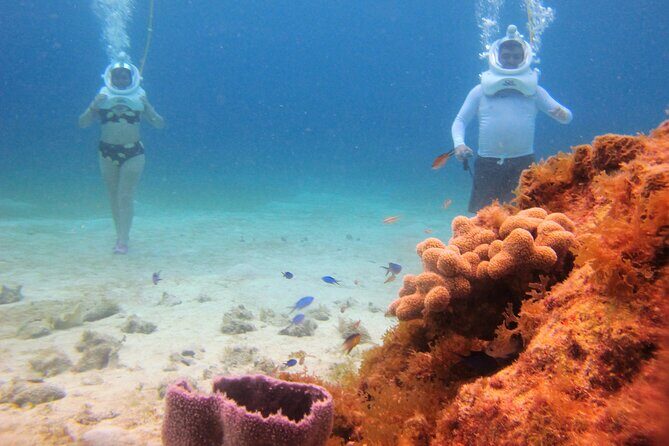
Sea Trek is basically a guided underwater stroll using a helmet that keeps your head and shoulders dry while you breathe underwater. Your job is simple: follow your guide, keep your balance, and look around. If you’ve ever felt intimidated by snorkeling or the idea of getting in deeper water, this format is one of the gentlest ways to experience the reef.
The staff approach matters here. Before you ever enter the water, your guide shows you how the helmet works and how the walk is supposed to feel. It’s not just a handout; it’s hands-on practice so you’re not guessing once you’re standing on the ocean floor.
And because it’s a small-group activity, the guide can adjust pacing. That means you’re less likely to get separated, and you’ll hear the marine-life pointers instead of just hearing a distant explanation while everyone crowds forward.
You can also read our reviews of more tours and experiences in Cozumel.


Entering the water at Chankanaab: ladder, white sand, and a calm pace
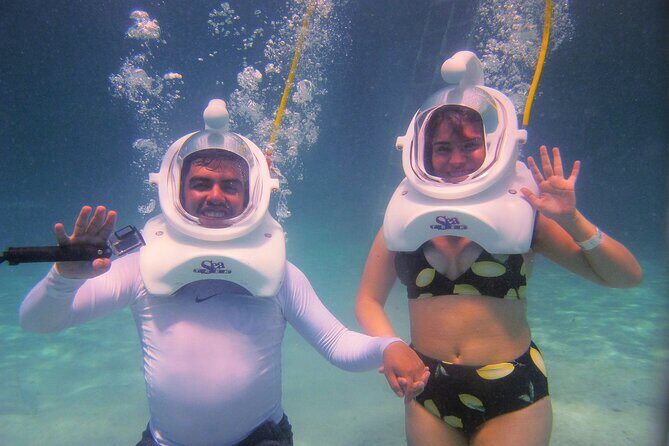
At Chankanaab Adventure Beach Park (inside Cozumel’s National Reef Marine Park), you’ll start right on the water’s edge. The standard sequence goes like this: your underwater guide places the helmet on your head, and then you descend via a seaside ladder down to the ocean floor.
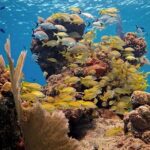
Once you’re down there, you walk on a white sandy bottom, not a scramble over rocks. This is a big deal for comfort and balance. You’re surrounded by corals and fish in the area, and your guide points out interesting parts of what you’re seeing—think “look left, notice this,” rather than “stare hard and hope.”
Timing also matters. Sea Trek isn’t built to keep you underwater for the whole outing. The operator targets about 25 to 35 minutes on the bottom, similar to the time you might expect from basic scuba-style underwater sessions using compressed air. You can also come back up if you feel off at any point, so you’re not trapped underwater.
A quick planning tip: don’t schedule other time-sensitive activities right after. Even in good conditions, the experience can run longer than you expect with fitting, brief explanations, and getting everyone settled.
Safety, instructions, and why the small details count
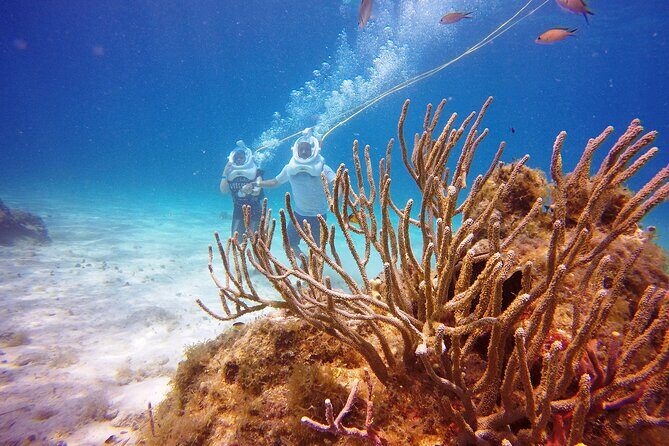
Safety is part of the product here, and it shows in the way they run the first minutes. Before you enter the water, you’ll be shown how to use the equipment and how to move safely. That instruction is what makes the experience feel approachable for non-swimmers.
There are also practical safety notes worth knowing:
- Helmet buoyancy should be controlled: the helmets are properly weighted so they don’t just float off your head.
- You rely on your guide: there may be guidance elements depending on the setup and location within Chankanaab; your best move is to follow the path your guide sets and ask questions if visibility or footing feels unclear.
- No feeding approach: the operation doesn’t attract fish by feeding them, so fish presence depends on what’s naturally in the area rather than a handout-based feeding routine.
If you’re the type who gets nervous about gear fitting, I’d treat the fitting step as your chance to get comfortable. Speak up if the helmet feels too tight, too loose, or awkward for your jaw or equalization. One of the clearest “considerations” that shows up for people isn’t the concept—it’s the fit.
Equipment, facilities, and what you get besides the underwater walk
Sea Trek includes the key gear: the Sea Trek helmet plus locker and shower access. After your underwater walk, you also get free snorkeling equipment to use during your stay in the park.
In other words, you’re not just paying for a short “stunt.” You’re paying for a structured experience plus a place to hang out and explore with gear provided. The lockers and showers help you transition out of wet gear without making your day a logistical mess.
One real-world detail to plan around: locker space can be tight. I’d bring only what you truly need into the visit, and consider using a small waterproof bag for essentials. If lockers are limited, you may need to leave some items with staff until you’re done.
Also note the park experience is language-friendly. The activity is offered in English, and you should receive a confirmation when you book. The tour uses a mobile ticket, which is handy once you’re in Cozumel.
Snorkeling after Sea Trek: the easiest way to add reef time
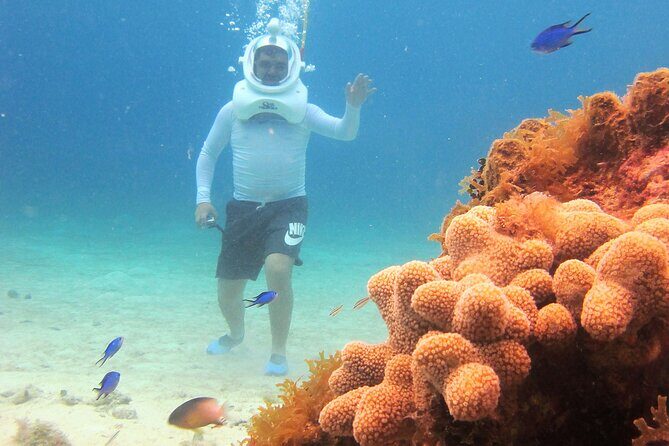
The nicest part of the flow is that the helmet walk isn’t the end of your marine-time. After you finish Sea Trek, you can stay around and snorkel with the included gear. That lets you spend more time in the water if you want it—without needing any special training beyond what you already saw in the helmet portion.
This pairing can also help if your underwater walk is short. Even if you don’t see everything you want while walking underwater, snorkeling afterward can add variety: more surface views, different angles of fish and coral, and a chance to linger.
Practical advice: because you’re in a timed experience, you’ll get the best outcome if you treat snorkeling afterward as flexible. Don’t plan to meet anyone right after the last possible minute. Build in buffer time for transitions.

Price and entrance fee: what your $79 really covers
Sea Trek costs $79.00 per person, and the activity runs about 1 hour 20 minutes on average. That time includes fitting, safety instruction, and the underwater walk experience (not counting optional time you choose to spend at the park afterward).
Here’s the part you should budget early: the Chankanaab Park entrance fee is $19 USD cash per person, paid at the gate. That means your true out-the-door cost is really $79 plus the entrance fee.
Is it good value? For many people, yes—because you’re getting equipment, trained guidance, and access to facilities, then adding free snorkeling gear. You’re not paying separately for a guide to escort you through the reef. You also get the “I can do this even if I’m not a swimmer” comfort factor.
If you’re traveling as a family or with a friend who’s hesitant about snorkeling, Sea Trek can be a cost-effective way to keep everyone together while still feeling like a real reef activity.
Group size, time slots, and avoiding disappointment
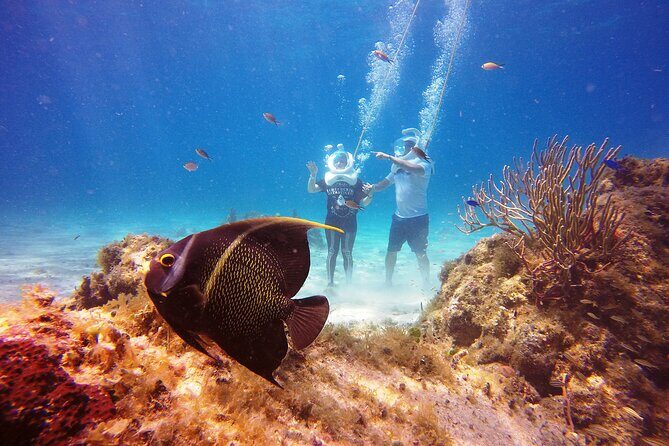
Sea Trek runs with a maximum of 4 travelers per group. That small group size is one of the best parts of the experience, because it makes instruction easier and helps the guide keep track of everyone during descent, walking, and exiting.
If your group is larger than four, you’ll need to book an additional time slot with a different group slot. (There’s also mention that the downtown location can accommodate up to 8 people per group, but your safest plan is to assume standard slots are limited to four unless your operator confirms otherwise.)
One more reason to plan ahead: it’s commonly booked well in advance. On average, people book about 46 days ahead. If you’re traveling in peak season or on a busy weekend, booking earlier gives you more choice of time slots and reduces stress once you land.
Who Sea Trek at Chankanaab is best for (and who should think twice)
Sea Trek is designed for people who want reef views without learning advanced water skills. It works especially well for:
- Non-swimmers or people who feel nervous about snorkeling
- Travelers who want guided safety and clear instruction
- Families with kids who meet the limits
- Anyone who likes structure and prefers a calm, managed pace
Minimum requirements matter. The activity is for most travelers, with a minimum age of 8 and a minimum weight of 80 pounds (36.3 kg). If you’re outside those limits, you’ll need to choose a different reef experience.
Where I’d think twice is when comfort and fit are uncertain. If you have a larger head or chin, have trouble equalizing pressure, or expect difficulty staying balanced underwater with a heavier helmet, you should flag it early. In cases like that, the experience can still be worth it—but you want to address fit right away rather than waiting until you’re already in the water.
Using a guide’s style to get more out of your walk
One subtle thing that can make or break the experience is how you communicate with your guide. If you’re nervous, tell them before you enter. If you’re comfortable, ask quick questions while you’re down there.
For example, one guide named Jose (and his partner) was specifically praised for being helpful from start to finish. That lines up with what you should look for: clear explanations, attentive guidance, and a willingness to adjust the pace so everyone can stay comfortable.
Your best “performance hack” is to treat this like a walk with a teacher, not a silent photo mission. If you drift, stop, or feel pressure changes, say something. The point is to keep you safe and comfortable, which usually makes the reef watching better.
Bottom line: should you book this Sea Trek in Cozumel?
I’d book Sea Trek at Chankanaab if you want an easier reef experience that doesn’t require swimming skills, and you like the idea of being guided while breathing through a helmet. The small-group format, provided equipment, and the option to snorkel afterward are strong reasons it can feel like more than a short ticket.
Skip (or seriously consider alternatives) if you expect a huge variety of reef sights like a long, adventurous reef trip, or if you know helmet fit is likely to be uncomfortable for you. Also, if you’re the type who needs “perfect conditions” on day one, plan a backup—reef visibility depends on what the water is doing that day.
If you’re unsure, ask yourself a simple question: do you want comfort and instruction more than you want a big, chaotic reef spectacle? If yes, Sea Trek fits.
FAQ
Do I need to swim for Sea Trek?
No. The experience is designed for you to walk underwater with a helmet and guidance, and it does not require swimming or snorkel experience.
How long is the Sea Trek experience?
It’s about 1 hour 20 minutes on average. Your time on the bottom is targeted around 25 to 35 minutes.
What’s the minimum age and weight?
Minimum age is 8 years old. Minimum weight is 80 pounds (36.3 kg).
What does the $79 price include?
It includes use of the Sea Trek helmet, lockers and showers, and free snorkeling equipment for after your Sea Trek.
Is the Chankanaab park entrance fee included?
No. The Chankanaab Park entrance fee is $19 USD cash per person and is paid at the gate.
How many people are in each group?
Bookings are limited to a maximum of 4 travelers per group.
Is the tour offered in English?
Yes, it’s offered in English.
What if weather is poor?
This activity requires good weather. If it’s canceled due to poor weather, you’ll be offered a different date or a full refund.
Can I cancel and get a full refund?
Yes. You can cancel up to 24 hours in advance for a full refund.