REVIEW · PLAYA DEL CARMEN
Bull Shark Extreme – 1tank /Only for Certified Divers
Book on Viator →Operated by SCUBA LIBRE · Bookable on Viator
Bull sharks in the wild feel unreal, even before you enter the water. This small-group outing in Playa del Carmen is built around a controlled feeding setup on a sandy bottom, with a guide and safety team close by. You also get to take part in SAVING OUR SHARKS, a project tied to reducing illegal fishing pressure on these animals.
I especially like how the experience is timed for the season when pregnant females show up around Playa del Carmen (typically November to March), and I like the care put into briefing and logistics before anyone goes in. One thing to consider: this is certified-only and the shop also charges extra for full gear rental and marine park fees, so your final cost can climb if you need everything.
If you want a close, calm encounter with one of the ocean’s most misunderstood predators—without turning it into a circus—this is a very strong option. Just go in with realistic expectations: bull sharks are not “easy pets,” and they can be shy.
In This Review
- Key Points to Know Before You Go
- Playa del Carmen Is One Of The Few Places For Bull Sharks
- The Real Price: What $210 Covers (And What It Doesn’t)
- Check-In Timing And How The Day Flows
- On The Water: From Sandy Bottom Descent To Feeder Waiting
- Safety, Staff, And The One Big Tradeoff: Your Gear Choices
- The Conservation Angle: SAVING OUR SHARKS Isn’t Just a Slogan
- What The Experience Looks Like Underwater (And What To Watch For)
- Timing For Sharks: When Your Chances Are Best
- Photos With A Dedicated Photographer: A Real Souvenir Option
- Who Should Book Bull Shark Extreme
- Should You Book Bull Shark Extreme?
- FAQ
- Do I need scuba certification to join Bull Shark Extreme?
- How long does Bull Shark Extreme last?
- What time and where do I meet?
- What’s included in the price?
- What extra costs should I expect?
- What depth should I plan for?
- How big is the group?
- When is the best time to see bull sharks in Playa del Carmen?
- What happens if it’s canceled due to weather?
Key Points to Know Before You Go
- Certified-only format: you’ll need proof of valid scuba certification to join.
- Small group capped at nine: you get more attention and a more controlled, quieter setup.
- 24-meter sandy bottom with feeder: you’re not hunting depth; you’re watching behavior.
- Season matters: November to March is the best window for bull shark sightings near Playa del Carmen.
- Sharks can be shy: patience is part of the deal, even with a feeder in place.
- Optional photos are popular: a photographer joins, and many people say the photo package is worth it.
Playa del Carmen Is One Of The Few Places For Bull Sharks
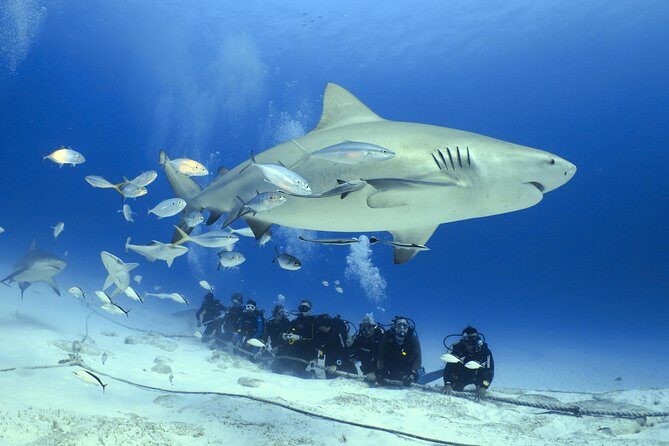
Playa del Carmen is special for one simple reason: this is one of the limited places in the world where you can observe bull sharks regularly on a structured underwater program. The timing is the big clue. From November to March, more pregnant females appear around the area, then they head to secret birthing locations afterward.
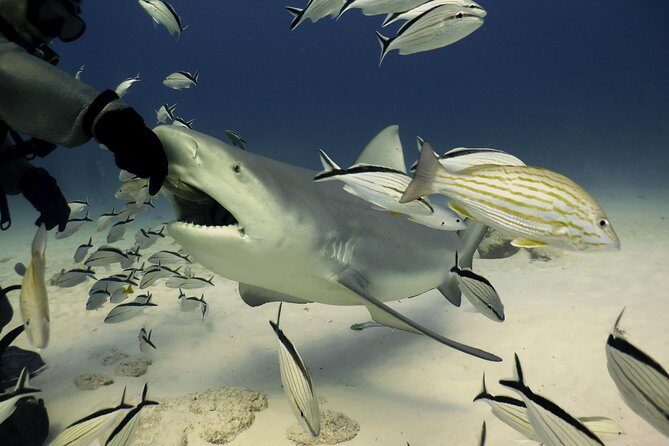
The best part for you is that this isn’t just marketing about a famous animal. The setup is designed for observation. You line up near the feeder area and watch how bull sharks swim in and around the group. Even better: bull sharks can be shy, so you’re not forcing a chase. You’re waiting for them to feel comfortable enough to show up.
And yes, “feeding” is the mechanism that brings them in—but it’s also the reason the team can run a more consistent experience. It’s controlled, not chaotic.
You can also read our reviews of more tours and experiences in Playa del Carmen.
The Real Price: What $210 Covers (And What It Doesn’t)
The listed price is $210 per person for the 1-tank experience (about two hours total). That’s a fair base rate for a certified-only outing focused on a specific species, led by a guide, and limited to a small group.
But you should budget for two add-ons:
- Full gear rental (BCD, regulator, wetsuit, fins & mask): $25 per person
- Boarding & marine park fee: $20 per person
So if you need full rental gear and you have the park/boarding fee on top, you’ll likely be closer to $255 all-in. If you bring your own kit, that drops.
Value check: you’re paying for a guide-led, safety-managed setup, plus a chance to observe a species that’s not commonly available for this kind of consistent encounter. You’re also helping a conservation project connected to avoiding illegal fishing. That matters when you’re looking at price versus meaning.
Check-In Timing And How The Day Flows
The meeting time is given as 14:15 (2:15 pm), and the start time is listed as 2:30 pm. In practice, that usually means you’ll want to arrive at the meeting point with time to spare for paperwork and equipment checks.
You’ll start at Scuba Libre on Calle 4 Nte, in Centro (near the beach area). The address is: Scuba Libre, Calle 4 Nte Manzana 3 entre 5a avenida y zona federal maritima, Centro, 77710 Playa del Carmen, Q.R., Mexico. The activity ends back there.
From the shop, it’s just a short walk—then roughly five minutes later you’re at the site. That keeps “getting there” from eating your whole afternoon.
What happens before the water matters. You’ll do paperwork, get checked on gear, and then get a clear safety and logistics briefing. Based on the way the team gets praised, the briefing is not generic. It’s detailed enough that you should feel mentally set before you descend.
On The Water: From Sandy Bottom Descent To Feeder Waiting
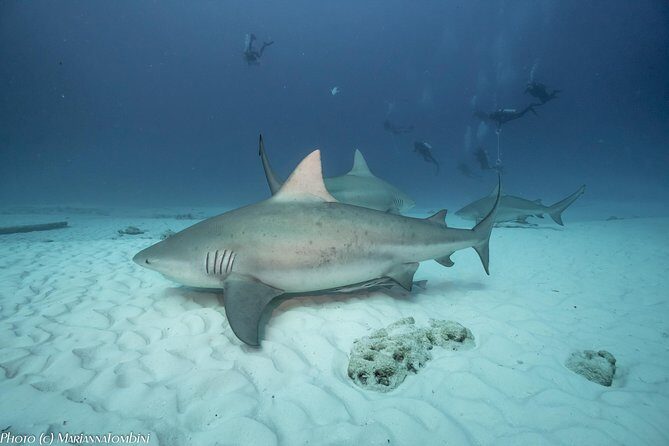
You’ll head to about 24 meters / 72–75 feet over a sandy bottom. Once everyone is in position, the group lines up in front of the feeder. If you want it, there’s also a line to hold during the setup. That’s a small detail, but it can make a big difference when you’re trying to stay calm and stable.
Then comes the waiting game. It usually takes only a few minutes for the sharks to show up. Still, plan on patience—bull sharks can be shy, and “few minutes” can stretch if they don’t immediately approach the feeder area.
Once they arrive, your underwater time is about 35 minutes. You’re observing as they swim around you and move through the space near the group. This is not about racing to the deepest part of the site. The point is watching the animals behave naturally within a controlled environment.
If you’re prone to overthinking, this helps: the setup gives you a focus. Look, don’t chase. Stay neutral. Let their curiosity come to you.
Safety, Staff, And The One Big Tradeoff: Your Gear Choices
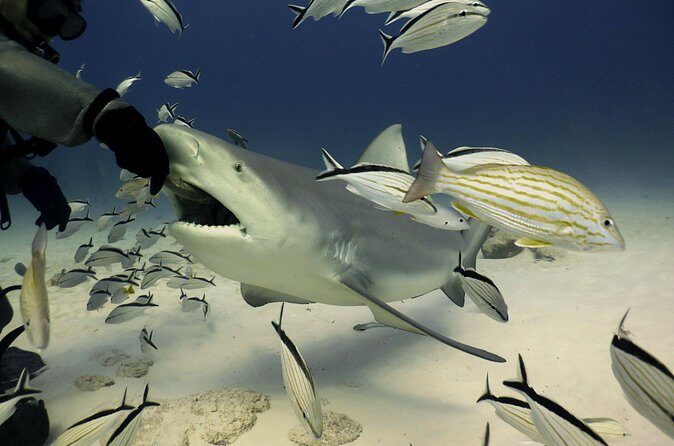
Safety is the main question you should ask before booking any shark encounter. The good news: people consistently describe the Scuba Libre team as professional, attentive, and safety-first. They call out thorough pre-water briefings and say they never felt unsafe.
You’ll also be in a maximum group size of nine, which tends to make communication easier. And the experience is specifically for certified scuba participants, so you’re not learning how to control buoyancy while you’re surrounded by a lot of adrenaline.
That said, one review raised concerns about equipment and advice related to managing profiles. The issues mentioned included a regulator failure during an emergency at depth, tank/air issues on the boat, and confusion around how to manage no-stop limits and stops.
The provider’s response matters because it explains their staffing and management approach: they say the outing runs with a dedicated feeding setup, a safety spotter, and a photographer team member, and that safety staff are also trained as instructors. They also say the outing’s depth max is 24 meters / 75 feet, and they clarify that guides follow profiles while each participant with a computer follows their own data.
So here’s your practical takeaway, and I think it’s the most useful part for you:
- If you’re serious about comfort and control, bring your own gear if you can.
- If you use a computer, trust your own limits and don’t treat the guide’s plan as a substitute for your training.
- Listen closely to the briefing, then follow your training on buoyancy, air management, and stops.
You can still book with confidence, but don’t treat this as casual. Treat it like what it is: a structured, deeper, species-focused scuba session.

The Conservation Angle: SAVING OUR SHARKS Isn’t Just a Slogan
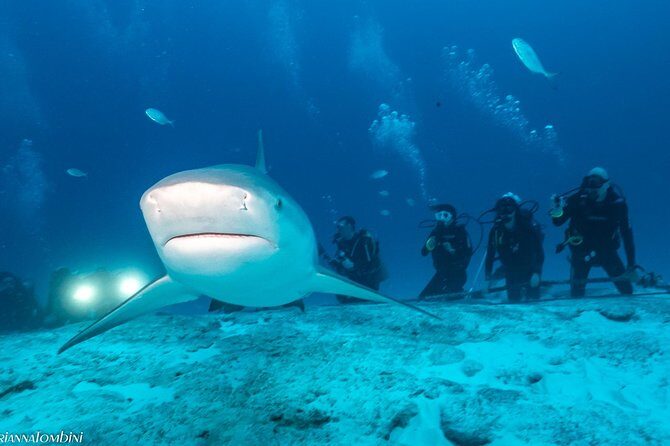
One of the best reasons to book is that this encounter is connected to protection work. The program is described as SAVING OUR SHARKS, and the idea is that the project supports shark protection by avoiding fishing pressure.
For you, that means you’re not just buying a thrill. You’re paying to take part in an operation that uses a feeder-based approach rather than hunting sharks. It’s a small but real difference in how these animals are treated.
Also, bull sharks are not a “safe to ignore” species. Where they are present, they tend to face pressure—so when an operation has a stated conservation mission, it’s worth weighing that along with the photo and adrenaline value.
What The Experience Looks Like Underwater (And What To Watch For)
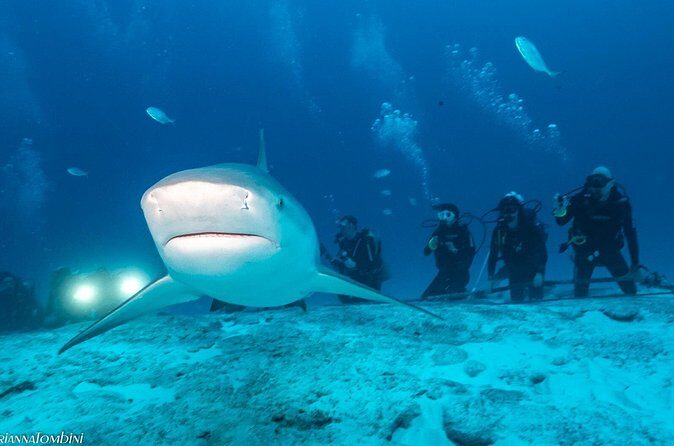
This is a behavior-focused encounter. Bull sharks are often depicted as aggressive, but in this program they’re typically observed swimming close and circling calmly when conditions are right. The information you’re given also sets expectations: bull sharks can be shy, so don’t assume they’ll appear instantly and stay for the full time.
Watch for:
- The first arrival: you’ll know quickly whether they’re curious or just passing through.
- Their pace and distance from the group: you may see them approach and then drift back.
- How they react to stillness: staying composed often gets you closer sightings.
You’ll also want good buoyancy. If you control your position and stop messing with your fins, you’ll have a more relaxing time—and you’ll be easier to manage for the guide.
If you’ve only done shallow water outings before, this is where training pays off. You’re not expected to be fearless; you’re expected to be controlled.
Timing For Sharks: When Your Chances Are Best
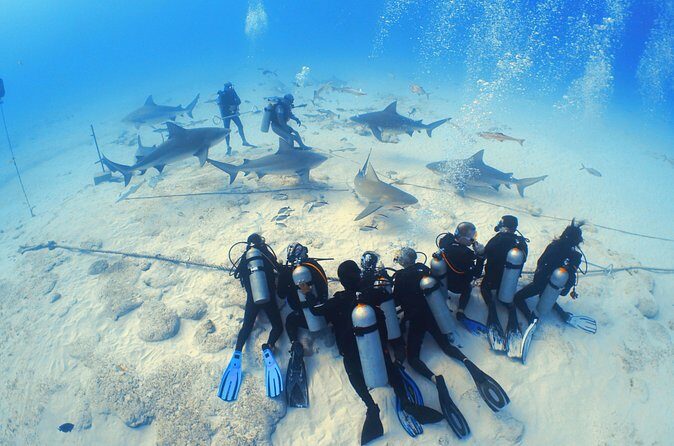
Your calendar matters here. The best time to see bull sharks around Playa del Carmen is typically November through March, when pregnant females are present before moving to their birthing locations.
If you’re planning from outside Mexico, this is a real scheduling lever. Visit during those months and your odds go up. Go outside that window and you might find fewer sightings, or you might spend more time waiting and less time watching.
If shark sightings are the whole point of your trip, plan your vacation dates around this reality.
Photos With A Dedicated Photographer: A Real Souvenir Option
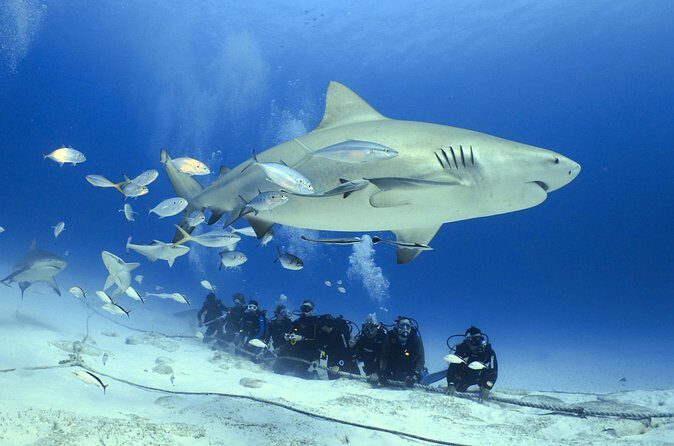
One thing that pops up in the feedback is photography. People mention a photographer (names tied to the team include Travis Xander, and others referenced Alex @scubalibremx), and they say the photo package is worth the cost.
If you care about souvenirs, this matters. Underwater shots at depth aren’t automatic. A photographer can help with timing and framing when the sharks appear.
Practical advice: if you want good photos, be ready to stay still and hold position when you’re asked. That’s the moment the photographer gets the sharpest results.
Who Should Book Bull Shark Extreme
This outing fits best if you:
- Have valid scuba certification and are comfortable at about 24 meters
- Prefer structured, small-group wildlife observation over a free-for-all
- Want a guided experience with a safety team and a controlled feeding setup
- Are open to the idea that sharks may take a few minutes to show up
It’s also a good fit if conservation matters to you. The program frames itself around protecting bull sharks by reducing fishing pressure, which gives the experience more weight than a one-time thrill.
Should You Book Bull Shark Extreme?
I’d book this if you’re visiting Playa del Carmen in November to March and you want one of the most consistent ways to observe bull sharks in a structured, safety-managed setup. The small group size and the focus on briefing, gear checks, and observation are strong signals.
Skip it—or at least reconsider if you’re not ready to handle deeper, controlled scuba conditions. You’ll need your certification, you’ll want to manage your own no-stop limits, and you should strongly consider bringing your own gear if you’ve had equipment issues in the past.
If you do book, go in calm and give the sharks time. The payoff isn’t just that you saw bull sharks. It’s that you watched them act like real animals, not show ponies.
FAQ
Do I need scuba certification to join Bull Shark Extreme?
Yes. Evidence of a valid dive certification is required for all participants.
How long does Bull Shark Extreme last?
It runs for about 2 hours (approx.).
What time and where do I meet?
Meet at Scuba Libre in Centro, Playa del Carmen. The meeting time is listed as 14:15, and the start time is listed as 2:30 pm. The address is Calle 4 Nte Manzana 3 entre 5a avenida y zona federal maritima, Centro, 77710 Playa del Carmen, Q.R., Mexico.
What’s included in the price?
Included are tanks and weights, plus a dive guide.
What extra costs should I expect?
You may need to pay for full equipment rental (BCD, regulator, wetsuit, fins & mask) for $25 per person, plus a boarding & marine park fee of $20 per person.
What depth should I plan for?
The experience is described as reaching about 24 meters (72 ft / up to 75 ft).
How big is the group?
The tour/activity has a maximum of 9 travelers.
When is the best time to see bull sharks in Playa del Carmen?
The best time is from November to March, when more pregnant females appear around Playa del Carmen.
What happens if it’s canceled due to weather?
This experience requires good weather. If it’s canceled due to poor weather, you’ll be offered a different date or a full refund.